Lesson 1 · 8 min
What compatibility means
Comparing two charts is one of the oldest uses of astrology. This lesson explains what the comparison looks at, where it came from, and what it can and cannot say about two real people.
Two charts, one conversation
Every birth chart describes one person. A compatibility reading sets two charts next to each other and asks how their patterns meet. Where one person's Moon falls against the other's Sun, or how one birth year animal relates to another, becomes the material of the reading.
In Western astrology this practice is called synastry, from Greek words meaning "together" and "star". The astrologer lays one chart over the other and looks at the angles between their planets. In Chinese tradition the comparable practice is often called he hun, "matching for marriage", where the birth data of two people are set against each other through animals, elements and pillars.
Both traditions share a quiet assumption: that two people are not judged alone but in relation. The comparison is about meeting, not ranking. That is a useful idea to hold on to, because it is also where many misunderstandings begin.
A comparison always starts from two complete charts. You cannot read the meeting of two people until you know, as accurately as possible, what each person's chart contains. That is why the birth date matters so much, and why a missing birth time should be noted rather than guessed.
Polarity: the simplest pairing
The Chinese system rests on yin and yang, two complementary qualities. Yang is read as outgoing, active and bright; yin as receptive, inward and still. Neither is better. Each needs the other, the way day needs night.
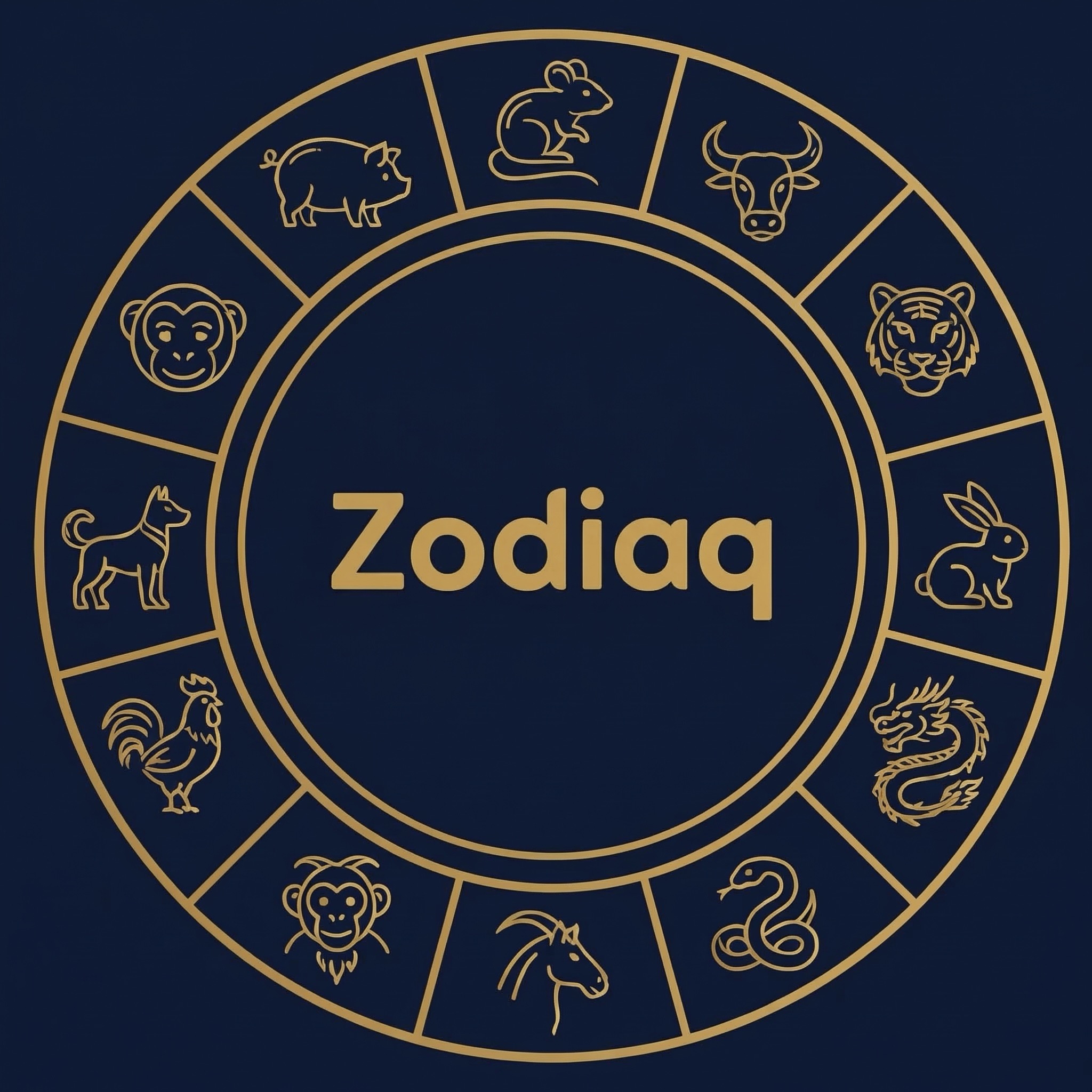
The twelve earthly branches, which carry the twelve animals, alternate between yang and yin in order. Rat, Tiger, Dragon, Horse, Monkey and Dog are yang. Ox, Rabbit, Snake, Goat, Rooster and Pig are yin. This polarity belongs to the branch itself, so it has nothing to do with a person's gender.
Western astrology has its own version. The fire and air signs were traditionally called masculine or positive, the earth and water signs feminine or negative. Modern astrologers often prefer words like active and receptive. In both systems, polarity is the first and simplest lens for a pair: do these two lean the same way, or do they balance each other?
What a reading can say
A compatibility reading can offer a vocabulary. It can suggest where two people might find ease, where they might rub, and what themes might deserve a conversation. Many people find that language helpful for reflecting on how they love, argue and make up.
Astrologers in both traditions also teach that no single factor decides anything. A clash between two animals sits beside harmonies elsewhere. A tense aspect sits beside supportive ones. Good readers weigh the whole picture and describe tendencies, not outcomes.
A reading can also show how a tradition thinks. Learning why astrologers pair certain signs or animals teaches you about Greek geometry, Chinese calendar cycles and the families who once used them. Even if you never consult a reading for yourself, the comparison is a window into how people have imagined love for thousands of years.
What a reading cannot say
A reading cannot tell you whether a real relationship will last, whether someone is right for you, or whether to stay or leave. Those questions belong to the two people involved, and to how they treat each other: honesty, kindness, shared values, and the way they handle conflict.
In this course every comparison is offered as symbolic description. If a reading ever seems to forbid a relationship, or to excuse unkindness, it has gone beyond what the tradition can honestly offer. Communication and behaviour matter far more than any pairing of signs or animals.
Key terms
- Synastry
- The Western practice of comparing two birth charts by looking at how one person's planets relate to the other's.
- He hun
- Chinese marriage matching: comparing two people's birth data, traditionally before a marriage was agreed.
- Yin and yang
- Two complementary qualities in Chinese thought. Yang is read as active and outward, yin as receptive and inward.
- Earthly branch
- One of twelve signs in the Chinese calendar, each paired with an animal and a polarity.
- Polarity
- Whether a sign or branch leans yang (active) or yin (receptive).
Worked example
Maya and Jun: a first look
Throughout this course we compare two teaching samples. Sample A, Maya, was born on 15 March 1992 at 14:30 in Lisbon. Sample B, Jun, was born on 2 November 1986 at 08:10 in Seoul. They are not real people, and nothing here describes a real couple.
Maya was born in a Monkey year (the Ren Shen year, Yang Water Monkey). Jun was born in a Tiger year (the Bing Yin year, Yang Fire Tiger). Both Monkey and Tiger are yang branches, so on polarity alone the two lean the same way: both are read as outgoing and active.
That is all polarity can tell us. It does not say they will get along or fall out. In later lessons we will add elements, aspects and animal relations, and we will see that some factors in their charts point toward ease while others point toward friction. A first look is only a first look.
History and traditionMatching across centuries
Comparing charts for marriage is old in the Western tradition. In the second century, Ptolemy's Tetrabiblos included a chapter on marriage that compared the Sun and Moon of two nativities, reading harmony when they stood in agreeable relationships. Medieval and Renaissance astrologers continued the practice, and the modern word synastry became common in the nineteenth and twentieth centuries.
In imperial China, marriages were usually arranged by families, often through a matchmaker. The traditional six rites of betrothal included a step known as "asking the name", in which the families exchanged the birth details of the young couple, later written as the eight characters of their birth pillars, so that a diviner could check the match. A poor result could end the negotiation. The couple themselves often had little say, and these arrangements could be coercive, especially for young women. China's 1950 Marriage Law banned arranged and forced marriage.
Matching survives today in gentler forms. In Korea, gunghap readings remain a popular way for couples to talk about compatibility, and in many communities families still consult almanacs. Studying this history honestly means respecting the culture while being clear that no chart should decide who someone may love.
Try it: Sort the animals by polarity
Place each of the twelve animals in the yang group or the yin group.
Choose a group for each item.
Check your understanding
Question 1 of 5
Think about it
When you hear that two signs or animals "go well together", what do you notice in yourself: curiosity, comfort, worry? What might that tell you about how you use these ideas?